

pmbyt.over-blog.com/
24 Janvier 2021

Apple's laptops were historically the first to come widespread with webcams integrated into the screen frame.
Unfortunately, the new 12-inch MacBook comes with the same crappy 480p FaceTime camera that the old version offered. Yes, for some unknown reason, Apple has kept the same camera while updating. Yes, FaceTime HD works with 'the most recent Macs,' but by 'most recent,' we mean 'the ones released today.' For reasons unknown, Apple appears to be limiting FaceTime HD solely to today's just-released MacBook Pro computers, rather than allowing it to work on all of the past Macs with 1280×1024 iSight cameras built in.
Apple started shipping these cameras (dubbed 'iSight') integrated into the screens of the MacBook and iMac around 2005, and have been a staple feature in nearly every product they have shipped since.
Now when you look around, you can't really find a laptop of any brand without an integrated webcam. They are an essential part of the computing experience.
But as the iPhone has led the pack in camera optics and technology in a small package, none of that love has made it back to the Mac. If you buy a (standard) iMac or MacBook Pro today, you'll get a 720p FaceTime camera. Meanwhile the iPhone is boasting multiple lenses, Portrait Mode, FaceID, and shoots at 4k.
It gets even more embarrassing when you look at the Tech Specs for the iPhone X versus today's iMac under the Camera category.
Will mac run on my pc. Granted, the iMac Pro (which will be released on 12/14) has bumped up the camera to 1080p, but I think this is more attributable to the cost of this part decreasing rather than Apple's intent on making the Mac's camera truly first-class.
And yes, I hear you. nobody is asking for Portrait Mode on the Mac 1, and some of these features only make sense in a phone (such as image stabilization). But Face ID? That's a perfect fit.
Face ID would be hands down way better than Touch ID on the Mac. (pun absolutely intended).
In addition to having better optics, the sensors are better, which allow for more light at lower ISO levels. In other words, it would work better in low-light situations and have a less grainy feel overall.
Think of what this would do to FaceTime on the Mac. Or the increasingly common person who works from home and attends meetings remotely, often with the camera turned on (👋🏼). These experiences get notably better with better quality cameras.
Since I've been doing more and more video (and because the iMac camera is awful) I invested in an HDMI capture card and have been using a Canon Vixia HF G30 (1080p / 60fps) camera as my webcam when joining meetings. People always comment on the quality of the picture.
Remember back in the day when Apple was bold enough to put the Apple logo 'upside down' on their laptops?
The genius of this was that the logo would face upright when the lid was open, exposing the awesome produce you are using to the people across from you in a coffee shop. It was for them to enjoy and envy.
Better FaceTime cameras on the Mac would do the same, and they are long past due.
1. Actually this could make Photo Booth fun and magical again. Remember the first time you played with Photo Booth? ↩
Apple recently released a new MacBook Pro, and it has all the latest specs: latest generation CPU, blazing-fast SSD, and keyboard so good that they call it Magic. One thing that didn't change is the camera.
In fact, Apple didn't change its webcams since 2012. If you check specs for 2020 MacBook Pro and specs for Late 2012 Mac, they both have '720p FaceTime HD camera'.
So, if you are a YouTube blogger or need a good camera for school or work, you either have to use iPhone or buy an external device.
I reviewed multiple webcams, and the following are my best recommendations.
| Camera | Rating |
|---|---|
| Logitech BRIO – Ultra HD Webcam for Video Conferencing, Recording, and Streaming | Best 4K Camera ★★★★★ |
| Logitech C930e 1080P HD Video Webcam | Best USB 2.0 camera ★★★★★ |
| Allinko 880 Auto Focus Webcam 1080P with Camera Cover | Budget Pick ★★★★☆ |
Let's start with the fact that 720p cameras outdated. Apple had it on its laptops for 8 years, and eight years is a long time in the technology world.
Why did Apple not change it yet? I guess the reason is that the company likes big margins on its products. While they don't provide sales numbers, I remember reading somewhere that they sell iPhones with a 50% margin, i.e., they sell a phone that costs them $200 for $400.
And one way to increase margins is to buy cheap parts. Since they can put cheap slow CPU into MacBook, Apple saves on non-essential parts such as webcam or audio.
But let's compare 720p and 1080p cameras. It sounds that 1080 is not much bigger than 720; however, the difference is quite big.
A 720p camera has a resolution of 1,280 x 720 (921,600 pixels per image), and 1080p has a resolution of 1,920 × 1,080 (2,073,600 pixels per image). In other words, the 1080p camera has a twice higher resolution.
More pixels mean a more detailed image. Have you ever tried to zoom in a picture until it gets blurry? Well, the depth of how far you can zoom in depends on the number of pixels. If the image has fewer pixels, it means the image quality is lower.
How about 4k cameras?
A resolution in 4K cameras is 3,840 × 2,160, or 8,294,400 pixels per image. As a result, they produce the highest quality.
More pixels are better, right?
The answer, as always is it depends. Besides, image quality twice more pixels also means twice more space. And the same length video will be about twice larger as well.
If you have limited storage on the MacBook, then very big files can be a problem. Fortunately, this problem can be easily fixed by purchasing a large external hard drive. These days it is easy to buy a good brand name 4TB drive for less than $100.
Another issue with large size files is it takes longer to transmit them over the network. So, if you need a webcam for video conferencing, getting a 4K camera may not be a good idea because the connection can be quite choppy with the higher video quality.
Yesterday I received an email from one of my readers, which reads as follows, 'I suspect my MAC has been compromised (I have a Macbook Pro) and all the software is up to date. I got a email from someone stating that they have recorded items via my macbook camera.'
I suggested purchasing a webcam cover on his MacBook.
Video project software. The same recommendation applies to external cameras. Fortunately, some of them have privacy cover included, so there is no need to research and buy an extra part.
Many webcams come with microphones as well. While MacBooks have a decent mic, sometimes it makes sense to use the one included in an external camera. It's just one more feature to consider before making a purchase. Pokemon tcg login. Adobe premiere pro cc 2019 13 1 150.
When choosing an external device, you have to know which ports are available on your computer.
For instance, if you have only USB-C ports, then having a camera which only supports USB 2.0 will not do any good. They are simply incompatible. It is true that you can buy an adapter, but having extra adapters is such a hustle, especially with MacBooks.
Ideally, I'd love to have Bluetooth devices whenever it is possible for two reasons. First, I don't like to have extra cables around my laptops; managing them is a nightmare. Second, if all ports are being used by other devices, you may not have a free one to attach the camera.
Unfortunately, I was not able to find good Bluetooth cameras. I believe it's because its bandwidth is not enough to transfer lots of data reliably. So, you have to choose between USB type A and type C.
Use USB type-A connectors with older Apple laptops: MacBook Pro 2015 or older and MacBook Air 2017 or older.
Use USB type-C connectors with newer Apple laptops: MacBook Pro 2016 or newer and MacBook Air 2018 or newer.
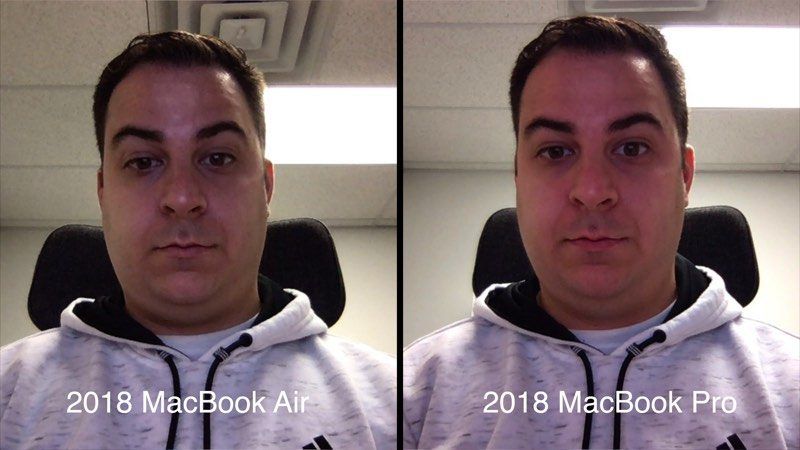
I have three simple rules when choosing webcams:
Logitech is a brand well known in peripheral devices for computers and BRIO its top of the line product for external cameras.
It is being recommended virtually by every technology-minded site, and there are many reasons behind the recommendations.
The video quality is very high. You can see how BRIO compares to cameras built-in on MacBook, iMac, and Dell Inspiron laptop.
If you go to Amazon, you can see how BRIO compares to other Logitech cameras. BRIO supports multiple view angles (90, 78, or 65 degrees), which can be selected by its software. At the same time, the camera is UVC-compliant, which means it's a plug and play device.
Things I like:
Things I don't like:
Another good product from Logitech. This camera is best for video calls when you want a good image quality without taxing network bandwidth. This camera is being used by many users for many years, and it's more appropriate for older MacBooks (without USB-C ports).

Things I like:
Things I don't like:
If you are on a budget, this webcam worth looking at. The truth is that not everyone needs a premium device, especially if you need for video calls only. It has the decent image quality and the longest cable to connect to the USB port.
Things I like: Buy legacy of the void only.
Things I don't like:
The MacBook is definitely a 21st-century technological marvel, offering users an ever-increasing range of services accessible at their fingertips. These range of services can sometimes lead to annoying bugs with either the hardware, software or both components, problems such as the Mac FaceTime camera not working bug.
After successfully installing certain Mac Operating Systems such as the OSX Mavericks, users have complained of experiencing the Mac FaceTime camera not working, install new camera error. In addition, some users complain of experiencing this same error even when there was no OS upgrade, but just switched to use the MacBook's camera either via Photo Booth, FaceTime or some other apps.
Over the years, camera issues such as the Mac FaceTime camera not working problem has been identified to be less cumbersome to rectify, thereby we advise users to exercise some ease while resolving this issue on their Mac. Below are some basic steps that can be used to rectify them:
The first step to resolve this issue would be to confirm whether it is an application problem, or a software problem. To confirm if it is an application problem or a camera problem, ensure you test multiple official Apple applications on your Mac that use the camera. Test iMovie, FaceTime, Photo Booth etc.
Should the Mac FaceTime camera not working problem only exist for a few applications, then it is safe to say that the error is from the affected applications. Alternatively, should the problem exist across all applications, then it is safe to say that the camera hardware, software or its supporting firmware might be the source of the issue.
True to the MacBook nature, even recent Macs do not support camera setting app. This might be due to the fact that most applications using the webcam possess setting options to help users tweak the feature to their taste. In the application interface, ensure you select the built-in camera as your means of capturing and ensure to set its features appropriately prior to calling on Skype or FaceTime or any other application to avoid the occurrence of the Mac FaceTime camera not working or other similar issues.
If the above solution does not work, executing this moderate solution should yield positive results. End all camera dependent applications then access the Applications > Utilities folder and activate the ActivityMonitor.app. In the appearing options, search for the process name VDC Assistant and kill the process by pressing the X tab in the topmost left corner. A confirmatory message would pop up, afterward restart the camera dependent apps.
Due to some broken underlying processes that might be mitigating applications' ability to access the camera, it is possible the above problem persists. To end all processes, it might be necessary to reboot your MacBook especially after the quitting option fails to yield positive results.
Restarting ends all processes while leaving the RAM untouched but care should be taken to completely shut down the entire system than to use the Restart route. This restarting process is relatively easy as most users are already familiar with it.
Should the problem persist after all the above fixes, then it is important to try this slightly nerdy fix. A software names VDCAssistant is responsible for activating the camera when needed and most often when this software hangs or experiences a glitch, it relays such bugs across all camera dependent app, inhibiting their use of the camera.
Should the Mac FaceTime camera not working problem be application specific, then it might be a compatibility issue that can be fixed by updating the application in the App Store to the latest version. Moreover, during the existence of such problems, should there be an available security update, it is advised users update their operating systems to the latest versions.
It is highly possible the glitch you are experiencing has been identified and fixed by the Apple team, hence helping you avoid the rigors of troubleshooting and solution funding.
Related Read: Mac OS High Sierra Update not Showing on Mac App Store
Moreover, whether or not the above addressed problem occurs with their camera, some users experience another issue identified as the FaceTime activation is unsuccessful issue. This issue usually occurs immediately after their iOS update, and this brief section of the article would try to address it. Should this error occur to your device, consider trying iMyFone System Recovery to fix your iOS without data loss. To know more about how to fix FaceTime not activating after iOS 11. 3 update issue, click here, or try iMyFone iOS System Recovery to execute a quicker fix.
On a concluding note, it is safe to say that most Mac FaceTime camera not working problems are relatively minor bugs that can be fixed within minutes and is never be worth losing sleep over. Furthermore, the above hacks and fixes explained above represents the trusted and verified fixes to resolving such bugs and issues. Execute them chronologically and enjoy your MacBook's camera in no time.


/image%2F6176018%2F20210215%2Fob_07ab0e_best-price-apple-wireless-keyboard.png)
/image%2F6176018%2F20210215%2Fob_50d723_movie-processing-software.jpeg)
/image%2F6176018%2F20210215%2Fob_967b42_top-games-on-macbook-air.png)
/image%2F6176018%2F20210215%2Fob_79e8f8_apple-touch-bar-magic-keyboard.jpeg)